
Why brass machines better than any other common metal, how leaded and lead-free grades differ, and where brass is the wrong choice.
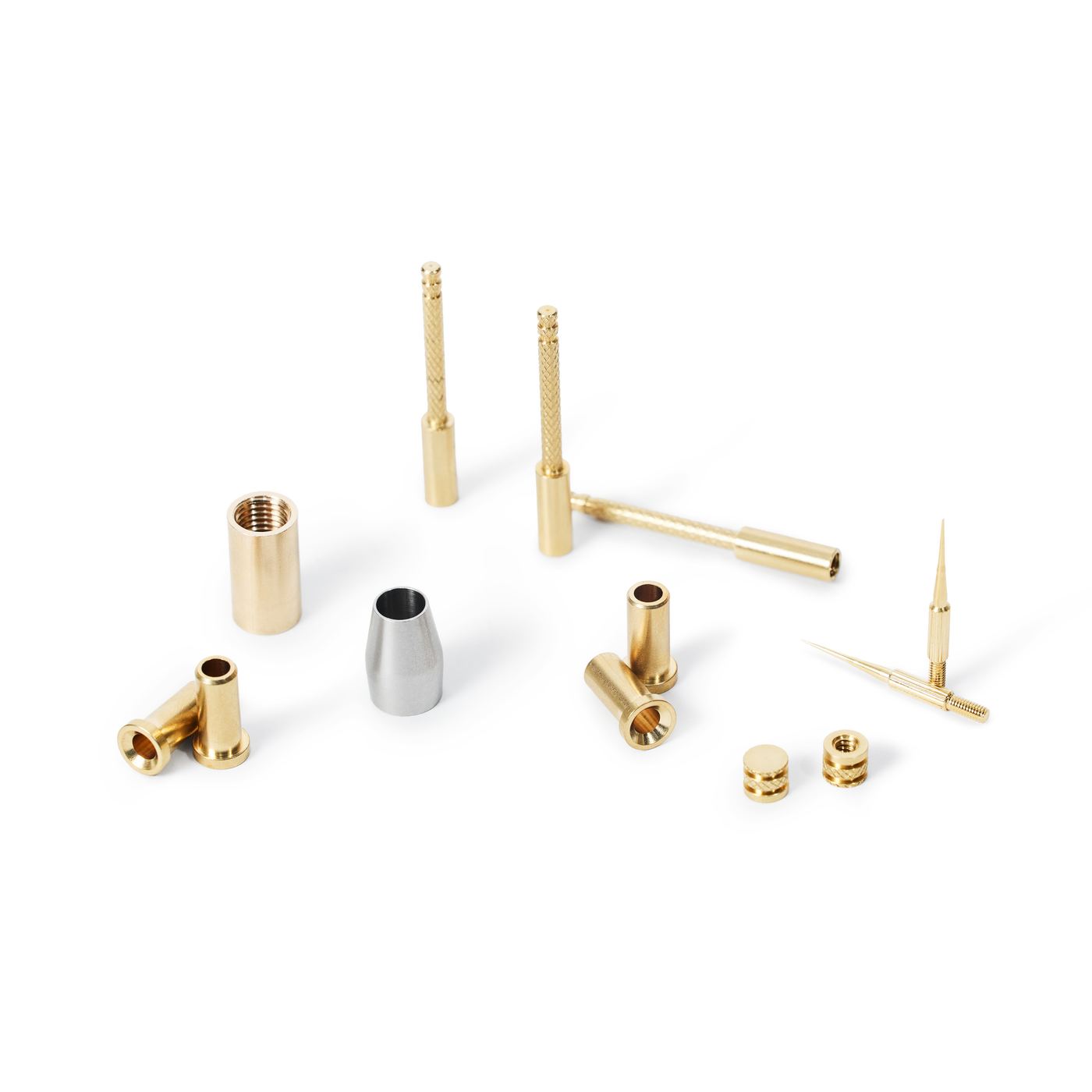
This page is the alloy selection and machining reference. For the services that produce the part see CNC machining → and Swiss machining →
Brass is a copper-zinc alloy, and it is chosen for a combination of properties that few metals offer together. It machines more freely than any other common metal, which means fast cycle times, low tool wear and a clean finish with very little effort. It conducts electricity and heat well. It is non-magnetic and non-sparking. It takes plating and polishing well, and it has a warm gold appearance that many products use as the finished look rather than a coating. It also solders and brazes easily, which matters for assemblies that are joined after machining.
Brass alloys differ in composition, and the choice that matters most for a machined part is usually the trade-off between machinability and lead content.
| Free-cutting brass | Leaded — lead is added to break chips, which is what makes this family so fast and clean to machine. It gives the best surface finish and the longest tool life, and it is the default for connectors, fittings and turned parts that are not restricted on lead. |
| Lead-free brass | Restricted-lead — used where lead content is limited, for example by RoHS, ELV or a customer specification, or where the part contacts drinking water. These grades generally machine differently from leaded brass, typically with longer chips and more tool wear, so cycle times and tooling need to be planned for the change. |
| Higher-strength brass | Alloyed — additional alloying elements raise strength and wear resistance where a plain free-cutting grade would be too soft, at some cost to machinability and conductivity. |
Tell us the alloy designation on your drawing. If the drawing only says "brass", the lead requirement and the conductivity requirement are the two questions that usually decide which alloy is appropriate.
Brass is the material machinists reach for when a part has to be made quickly and cleanly. Chips break short instead of stringing, which makes chip evacuation straightforward and allows deep pockets and drilled holes without the chip problems stainless and POM present. It cuts at high speed without building up on the cutting edge, tool wear is low, and the surface finish comes off the tool rather than needing a finishing pass. Threads cut cleanly, small features hold their shape, and thin sections are less troublesome than in most metals.
That ease is why brass is a good material for very small, high-feature-count parts, and why it is often run on sliding-headstock machines where the part is turned from bar. It is also why a brass part frequently costs less than the same geometry in stainless, despite the higher stock price. The same properties are why so many connector and pogo-pin components are brass: small, high-feature-count parts turned from bar in volume.
Two behaviours are worth knowing about. Brass work-hardens when it is cold-formed, so parts that have been heavily formed before machining can carry internal stress and may need a stress-relief step. And brass is susceptible to stress corrosion cracking in ammonia and amine environments, so a part that will be exposed to those, or to certain cleaning agents, needs the alloy and the stress state considered rather than assumed.
Brass tarnishes over time, so appearance is a design decision rather than a default. Polishing produces a bright reflective surface and is common on visible parts. Plating is used where a specific appearance or additional wear and corrosion resistance is needed, and the options include nickel, zinc, chrome and electroless nickel. Where the warm gold colour is the point, the part is often left unplated and polished, and the customer accepts the tarnish as part of the material's character.
A note on identifying brass in a photograph: colour alone does not establish the alloy. Several copper alloys share a similar appearance, and different brass grades look the same in a finished part. The alloy is determined from the material certificate and the drawing specification, not from how the part looks.
| Machinability | Best of the common metals |
| Chips | Break short, easy to clear |
| Conductivity | Good electrical and thermal |
| Magnetic | Non-magnetic |
| Main risk | Stress corrosion in ammonia |
| Availability | Alloy and lead status confirmed per RFQ |
Brass is quick to machine, so the alloy questions are usually what holds up a quote.
The full list, with the reasoning behind each item, is in the CNC machining RFQ checklist.
Many free-cutting brass grades do, because lead is what makes them break chips so cleanly. Lead-free grades are used where lead content is limited, for example by RoHS, ELV, drinking-water rules or a customer specification. Lead-free brass generally machines differently, typically with longer chips and more tool wear, so it is worth flagging the requirement at the enquiry stage rather than after the quote.
No. Several copper alloys share a similar appearance, and different brass grades look the same once machined and finished. The alloy is established from the material certificate and the drawing specification, not from how the part looks.
Because it machines so much faster. Brass chips break short, it runs at high speed without building up on the tool, and tool wear is low, so the cycle time and tooling cost are both lower. That often outweighs the higher stock price compared with stainless.
Yes, brass tarnishes over time if it is left bare. Whether that matters depends on the application. Many products use the warm gold colour as the finished appearance and accept the tarnish, while others specify polishing for a bright surface or plating in nickel, zinc, chrome or electroless nickel for a specific appearance or extra wear and corrosion resistance.
Yes. Brass is well suited to being turned from bar on sliding-headstock machines, which is how small high-feature-count parts such as pins, sleeves, threaded bosses and probe tips are usually produced. Send the drawing with the alloy and quantity and we will confirm the route.
Upload your CAD file with the alloy, lead requirement and quantity. Our engineering team reviews manufacturability and comes back with a quote.