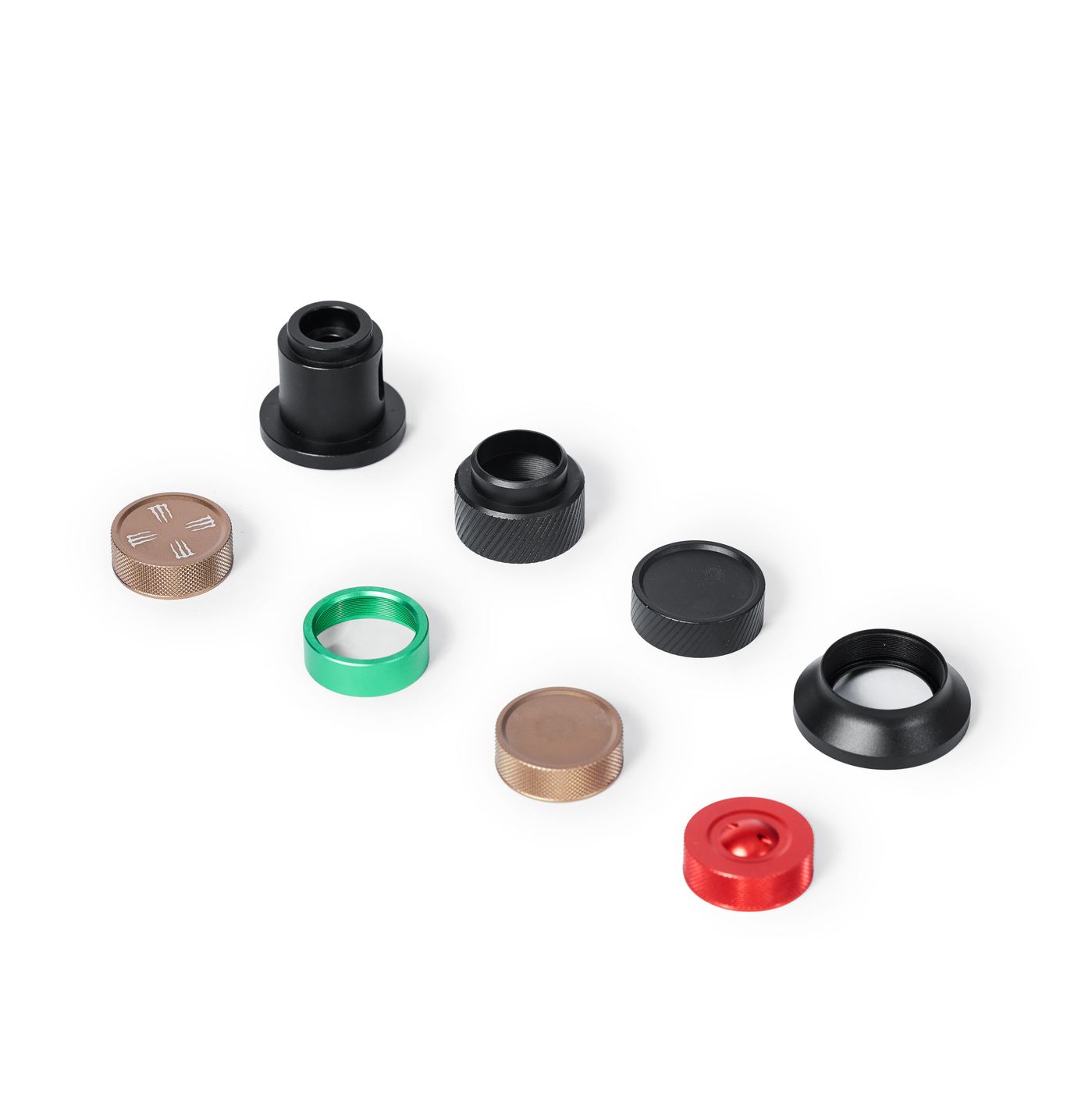
What finishing covers
Finishing is specified two ways, and they are not interchangeable. A mechanical finish is a surface texture produced by cutting, blasting, tumbling or polishing, and it is described by roughness. A coating or conversion finish is a surface layer produced chemically or electrochemically, and it is described by a standard, a thickness and a colour. Most drawings need one of each.
- Anodizing: Type II decorative and Type III hard coat on aluminium, clear or dyed
- Chromate conversion coating on aluminium, where conductivity as well as corrosion resistance matters
- Electroplating: zinc, nickel, chrome and electroless nickel
- Passivation and electropolishing for stainless steel
- Powder coating for durable colour on non-critical surfaces
- Mechanical finishes: bead and media blasting, hand polishing, tumbling, vapour polishing
- Laser engraving and marking where parts need permanent identification
Design considerations before you specify a finish
Finishes change dimensions. This is the most common cause of a finished part that no longer fits.
- Plating and anodizing add thickness. A plated thread will not accept its mating fastener unless the drawing allows for the build-up on the pitch diameter. The same applies to a bore that has to take a press-fit pin.
- Anodizing grows roughly half into and half out of the surface. Tight bores and threads either need masking, or they need to be cut oversize before anodizing.
- Hard anodizing on 7075 is not the same as on 6061. Alloy and temper change what coating is achievable, and the darker natural colour that suits one grade is a defect on the other when the drawing asks for a cosmetic match.
- Hydrogen embrittlement is a real risk on high-strength steel. Where a part falls in that strength range, plating has to be followed by a bake, and that requirement belongs on the drawing.
- Passivation is not a coating. It removes free iron from a stainless surface. It adds no material and does not change the colour.
- Powder coating cannot enter a blind threaded hole, and it needs a defined mask line if the finish stops on a visible face.
Specifying the finish on the drawing
The clearest drawings state four things: the process, the standard it is judged against, the thickness or coating class, and the appearance requirement. An instruction such as "anodize black" leaves the class, the thickness and the cosmetic acceptance undefined, and a part can meet that instruction and still be rejected at incoming inspection.
What to send for a finishing quotation
- Alloy and temper, or the material specification
- Finish process, standard, and thickness or class
- Masking requirements, and any surface that must stay conductive or bare
- Colour and gloss, and whether the requirement is cosmetic, functional, or both
- Whether finishing happens before or after final machining, and which dimensional features must be protected
- Quantity, and whether acceptance is visual, dimensional, or by test coupon
Finishing is coordinated with the manufacturing route rather than quoted in isolation, because the order of operations decides whether the finished part still meets tolerance. Send the drawing through the RFQ form and the compatible processes and inspection requirements are confirmed before production.