
Which aluminum grade fits your part, how each one behaves in the machine, and the design details that decide whether an aluminum part comes back right the first time.
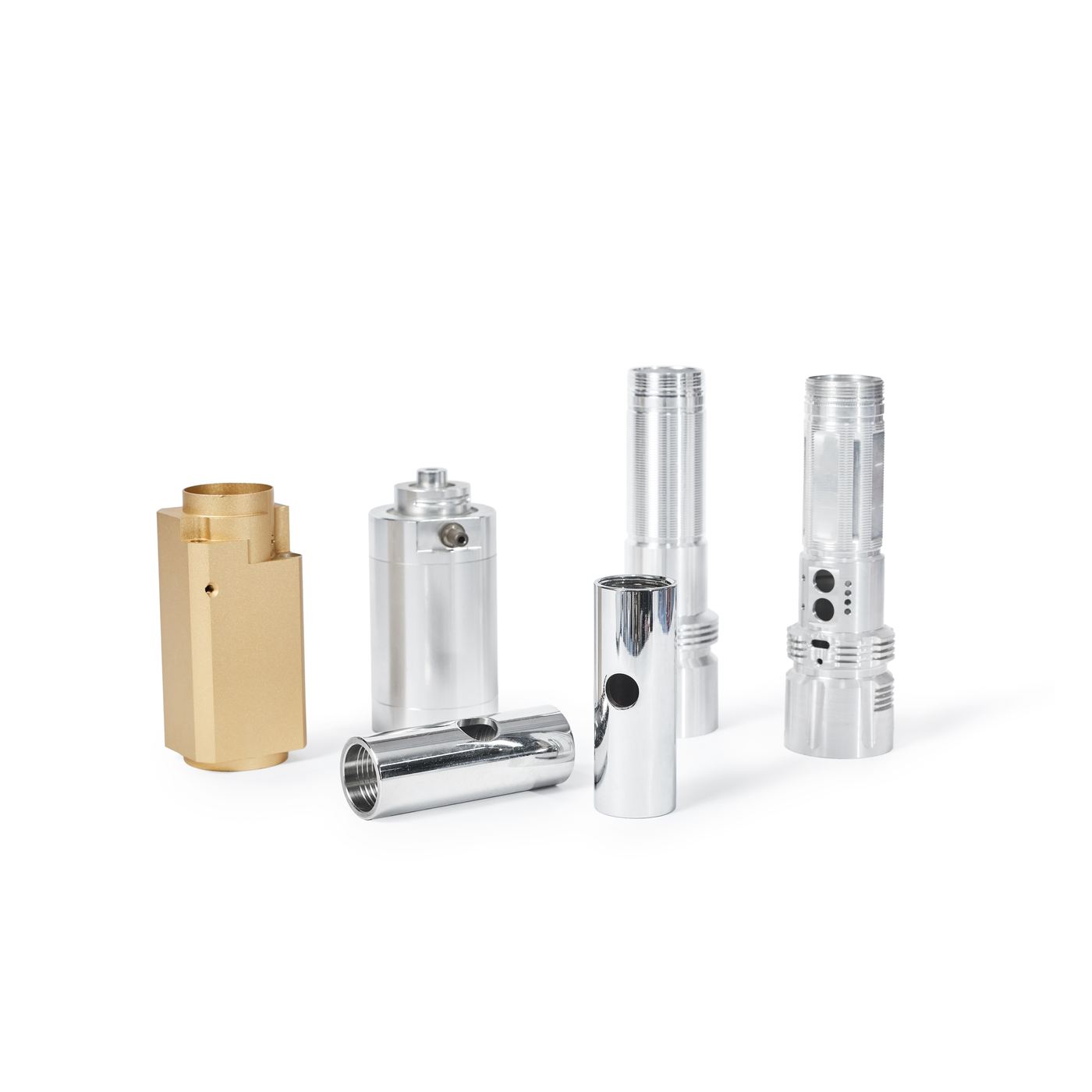
This page is the grade selection reference — which alloy to pick and how aluminum behaves during machining and finishing. For the service itself, including the processes we run, tolerances and lead times, see Aluminum CNC Parts Manufacturing →
Aluminum sits in a useful middle ground. It is roughly a third the weight of steel, it protects itself with a thin oxide layer instead of relying on a coating, and it cuts faster than stainless or titanium. On a machined part that usually means less machine time, less tool wear and a lower cost per part than the same geometry in a harder metal. It is also the easiest common metal to anodize, which matters when the part is visible to an end user. Lightweighting is the other reason buyers arrive here: structural and housing parts for EV and e-mobility programmes depend on aluminum for exactly that weight-to-stiffness ratio.
Grades commonly considered for machined aluminum parts include 6061, 6063, 7075, 2024, 5052, 5083 and 3003. They are not interchangeable. The differences that change a machining quote are strength, how cleanly the alloy anodizes, corrosion behaviour, and how the chips break at the tool.
| General purpose | 6061 — the default when the drawing does not specify. Good strength, good corrosion resistance, anodizes well, welds well. |
| Highest strength | 7075 — used where weight and strength both matter. Machines well but anodizes less uniformly than 6061 and costs more. |
| Best anodized appearance | 6063 — lower strength than 6061 but takes anodizing more evenly, so the finish looks more consistent on large visible faces. |
| Fatigue resistance | 2024 — high strength with good fatigue behaviour, but weaker corrosion resistance, so it is normally anodized or painted. |
| Formed or corrosion-exposed parts | 5052 — better corrosion resistance than 6061 and easier to form, at lower strength. |
| Marine and welded assemblies | 5083 — chosen for welded structures and saltwater exposure where strength after welding matters. |
| Low cost, simple parts | 3003 — low strength and highly formable. Rarely specified for structural machined parts. |
Specific grade and temper availability is confirmed against your drawing and quantity when we quote. If you are not sure which alloy fits, send the drawing and the operating conditions and we will recommend one.
Aluminum is forgiving compared with stainless or titanium, but it is not uniform. The softer tempers of 5052 and 3003 are gummy and tend to build up on the cutting edge, which smears the finish and makes it harder to hold a clean dimension. 6061 and 6063 cut cleanly and break chips predictably. 7075 and 2024 are stronger and more abrasive, so tool wear and surface finish need more attention.
Two things cause most aluminum problems on a drawing review. The first is thin walls and floors. Aluminum is stiff for its weight but not stiff in absolute terms, so a tall thin wall or a wide unsupported floor will deflect under cutting force and chatter. The second is heat. Aluminum expands noticeably as it warms, so a bore or a slot measured on a warm part can read differently once the part cools. On features with tight limits we plan where in the cycle the measurement happens.
Aluminum does not work-harden the way stainless steel does, which is the main reason it machines faster and holds tolerance more easily. Grinding is normally reserved for features that genuinely need it rather than applied across the whole part. When a part needs features on several faces, or a contoured surface that would otherwise take repeated setups on a three-axis machine, it is quoted to run on a 5-axis machining centre instead.
Aluminum is not always the answer, and it is worth saying so before a quote is issued.
Aluminum takes more surface treatments than most metals. Type II anodizing adds colour and moderate protection and is the usual choice for visible parts. Type III hard anodizing builds a thicker, harder layer for parts that slide, rub or see mechanical wear. Bead blasting and polishing set the texture underneath the anodize, and the order of those steps changes the final appearance.
One project worth reading: a 50-piece 7075-T6 sample batch for Blue Robotics, where the drawing tolerance was specified as ±0.02 mm after hard anodizing. The team changed the groove method during drawing review to avoid pressure marks on an adjacent face. Shenghao supplied dimensional, material and surface-finish documentation with the order. That figure is that project's drawing requirement, not a standing aluminum capability. Read the Blue Robotics case study →
The useful lesson generalises even though the number does not: post-finish tolerance has to be planned before machining starts, because anodizing changes the surface and visual features can change the process route.
| Weight | About one third of steel |
| Corrosion | Self-protecting oxide layer |
| Anodizing | Excellent, colour and wear grades |
| Machining speed | Fast, does not work-harden |
| Main risk | Thin-wall deflection, heat growth |
| Availability | Grade and temper confirmed per RFQ |
The more of this is on the drawing or in the enquiry, the more specific the first reply can be.
The full list, with the reasoning behind each item, is in the CNC machining RFQ checklist.
If nothing on the drawing forces a choice, 6061 is the safe default. Choose 7075 when strength-to-weight is the priority, 6063 when the anodized appearance matters more than strength, 2024 where fatigue resistance is critical, and 5052 or 5083 for corrosion exposure and welded assemblies. Send the drawing and the operating conditions and we will recommend one.
Yes, but the tolerance has to be planned before machining. Anodizing builds a surface layer, so a dimension that applies after finishing has to be machined with that layer in mind. Tell us which dimensions are measured after finishing and we will work the process around them. The appropriate tolerance for your part is confirmed against your drawing when we quote.
6061 and 6063 cut the most predictably, breaking chips cleanly and holding a good finish. 7075 and 2024 are stronger and more abrasive, so tool wear and finish need more attention. The softer tempers of 5052 and 3003 are gummy and tend to build up on the cutting edge, which makes a clean finish harder to achieve.
No. You can start with a single part to verify fit and finish before committing to a batch. The same engineering review applies whether you need one part or a thousand.
Yes. We machine as-cast features that need tighter tolerance or threaded holes. Send the casting drawing along with the features to be machined and the datums you want held.
Upload your CAD file with the alloy, quantity and finish. Our engineering team reviews manufacturability and comes back with a quote. No automated pricing tool, no shared sales inbox.